Date Published: August 21, 2026
Filter Duplexing: Keeping Mission-Critical Diesel Equipment Online
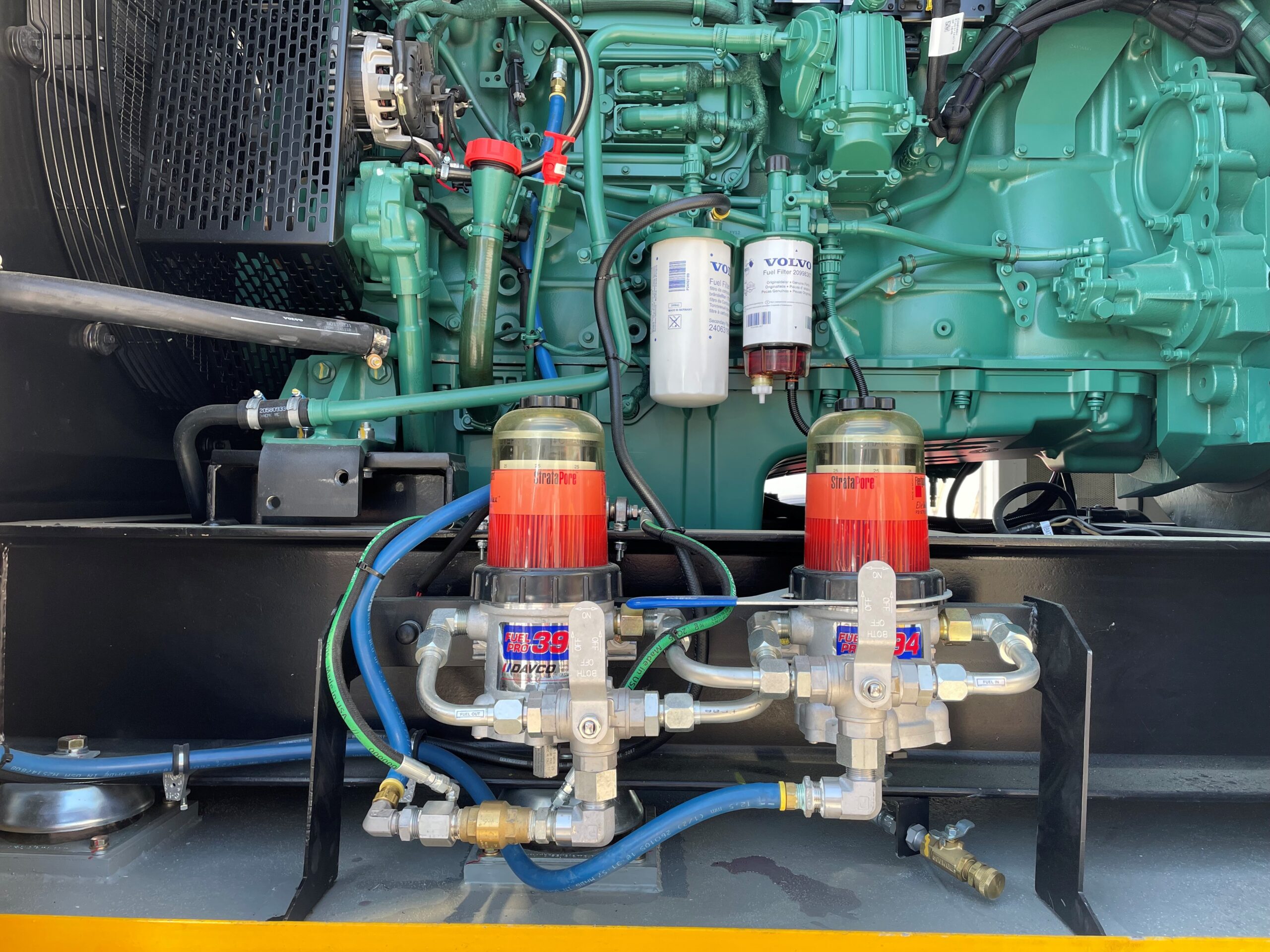
Some diesel engines can be shut down for routine service. Others cannot. A backup generator standing guard over a data center, a propulsion or auxiliary engine on a working vessel, a genset on a remote drilling site – when these run, they need to keep running.
Key Takeaway
Filter duplexing is how a crew changes a fuel filter on equipment without shutting it down.
This guide covers what a duplex fuel filter is, how the configuration works, and how to spec the right one for your application.
What Is Filter Duplexing?
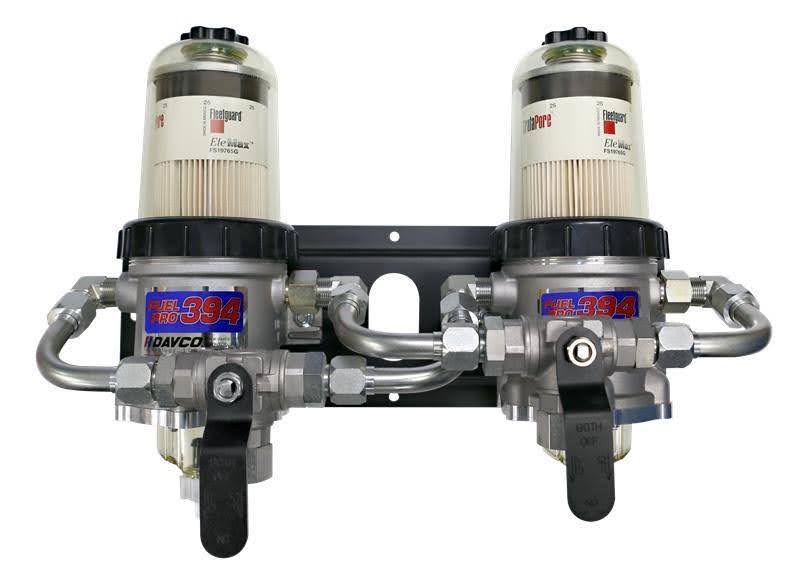
A duplex fuel filter uses two filter housings connected by a three-way isolation valve. Both housings filter fuel during normal operation, which DAVCO refers to as duplex mode. When one filter needs service, the crew turns the valve to isolate that housing while the other stays online and keeps the engine fed. Nothing shuts down. It helps to separate a duplex unit from a dual unit, because the two are easy to confuse.
| Dual Unit | Duplex Unit | |
|---|---|---|
| Flow path | Runs fuel through both housings for higher flow | The same dual configuration, with both housings filtering in duplex mode |
| Isolation valve | ✕ None | ✓ Three-way isolation valve |
| Service without shutdown | ✕ You cannot shut one side off | ✓ Take one filter offline while the equipment runs |
That valve is the whole point of duplex filtration – it’s what lets you take one filter offline while the equipment runs.
How a Duplex System Works
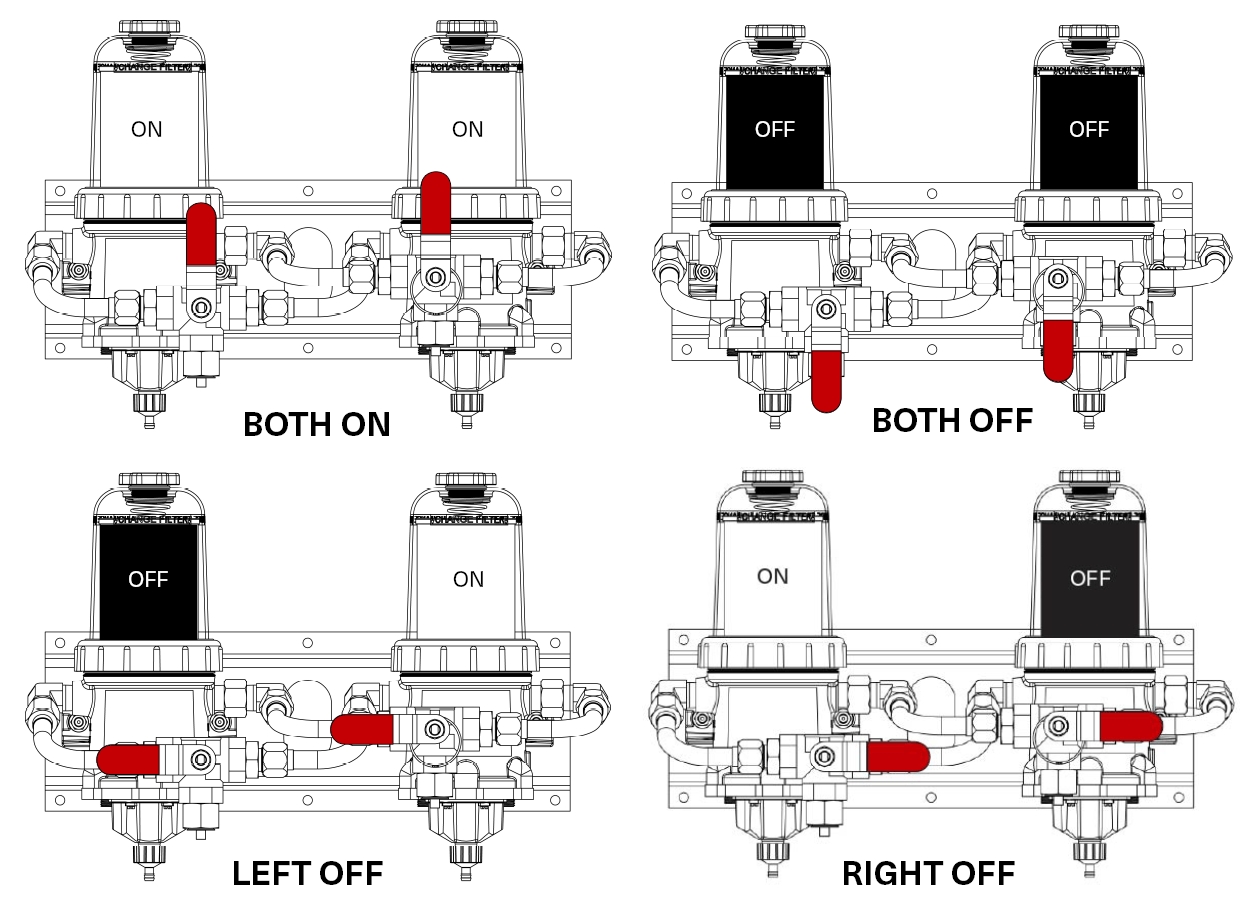
Under normal operation, the unit runs in duplex mode with both filters online. When it’s time to change a filter, the operator switches to isolated mode, closing off one housing so its element can be serviced while the engine draws fuel through the other. This is the hot swap – a filter change with no shutdown.
Some operators prefer to run a single side until that filter loads up, then switch to the other side and service the first; that comes down to preference, but the reason the duplex exists is to let a crew service one housing while the engine keeps running.
Valve Operation
| 1 | For single unit flow, rotate both three-way valve handles either to the left or right, depending on which unit is being used. Point the handles toward the unit you want to isolate. |
| 2 | For dual flow, rotate the valve 180° from the shutoff position (pointing up). |
| 3 | To shut off flow, rotate the valve handle 180° from the dual flow position (pointing down). |
Filter Change Procedure
Change the filter when the fuel reaches the black band at the top of the filter wrap.
| 1 | Isolate the filter that will be changed according to the valve instructions above. |
| 2 | Remove the vent cap and open the drain valve to drain the fuel below the collar level. Close the drain valve. |
| 3 | Remove the collar using the DAVCO collar wrench (P/N 482017DAV for Industrial Pro or 380134DAV for Fuel Pro). Remove the clear cover. |
| 4 | Remove the fuel filter element and seals. Dispose of the filter and the seals properly. |
| 5 | Using a clean shop rag, clean the cover, collar, vent cap, and threads on the DAVCO body. Do not use harsh chemicals to clean the clear cover. |
| 6 | Install the new filter and seals. |
| 7 | Install the clear cover and collar. |
| 8 | Apply downward pressure on the top of the cover and rotate the collar until contact. |
| 9 | Use a DAVCO collar wrench, if necessary, to tighten the collar three additional ribs. |
| 10 | Prime the DAVCO unit and check for leaks. |
When the service is done, return the isolated housing to service and the unit goes back to duplex mode.
How a Double-Filter System Allows Continuous Operation and Saves Shutdown Costs
With one filter housing, servicing the element means taking the engine offline. For most equipment that is perfectly fine, and it’s worth being clear about why.
DAVCO works with customers up front to spec the right unit and configuration to reach a target service interval and meet or exceed performance requirements. The unit is then changed at that predetermined interval alongside other engine and equipment maintenance – an oil change, for example – so the fuel filter service is not a separate stop. It’s part of the planned maintenance the equipment was coming down for anyway.
Operators who run single units know their allowable downtime window and plan around it. Unplanned downtime usually points to a fuel quality problem. If a filter plugs early due to poor fuel, that is the filter doing its job. A plugged element is far cheaper to change than the injectors, pump, and fuel-system components it just protected – the ones that could take equipment down for days or weeks at serious cost.
The bottom line: Duplex enters the picture when there’s no acceptable downtime window at all.
When You Genuinely Need Duplex
Use a duplex configuration when the engine or equipment cannot be shut down. If higher fuel flow is all you need, work with DAVCO to look at larger single unit, dual, or triple options. When a customer tells us the equipment cannot go offline, that calls for duplex.
Duplexing Across DAVCO’s Product Lines
Duplex configurations are available across the lines built for continuous-duty work.
| Product Line | Built For | Duplex Detail |
|---|---|---|
| Industrial Pro | Power generation, mining, oil and gas , and other off-road applications | These units offer short and tall duplex builds, sized to different flow rates. This is the line behind backup power for the always-on facilities noted above. |
| Sea Pro | Commercial marine | This is the ABS-approved choice. Its filter sits inside a fully enclosed steel body, which is what lets the Sea Pro hold up in a marine environment and protect against water intrusion. |
| Fuel Pro | Power generation and smaller engines where continuous operation still matters | A duplex option is on the way. The forthcoming Fuel Pro 394 takes the trusted Fuel Pro 382 and puts it into a duplex configuration. |
How You Know When to Switch and Service
DAVCO does not rely on differential-pressure gauges or sensors on most products. Instead, the clear cover, with its Seeing Is Believing® design, shows operators real time insight into their filter life and fuel system health.
The cover holds a finely calculated pressure, and as the fuel filter element loads with contaminants the fuel gradually overrides that pressure and rises up the filter. When the fuel reaches the band at the top of the filter, it’s time to change it.
Because its filter is sealed inside a steel body for ABS approval, there’s no clear cover, so it’s serviced at a predetermined hour interval, with an optional pressure gauge available.
How to Spec a Duplex Fuel/Water Separator
Sizing a duplex fuel water separator comes down to fuel flow, with one detail that trips people up. The unit has to handle the engine’s full fuel flow in isolation mode – not just in duplex mode – because isolation mode is what it runs on during a filter change. Most engine manufacturers require it.
| Industrial Pro Unit | Duplex Mode | Isolation Mode | Covers a 500 GPH engine mid-change? |
|---|---|---|---|
| Short Duplex | 600 GPH | 300 GPH | ✕ Short of the 500 the engine demands while one side is offline |
| Tall Duplex | 1,200 GPH | 600 GPH | ✓ Covers the 500 even mid-change |
Here is the trap. Say an engine needs 500 GPH. The right choice is usually the Industrial Pro Tall Duplex. It can look like overspending up front, but it is a safety factor for when the unit runs on one side and can protect from unnecessary downstream costs.
One more note: The engine manufacturer – Cummins, Caterpillar, and the like – is the source of truth here, because they designed and built the engine. Follow their recommendations, or work with DAVCO to interpret them.
Some customers also choose to oversize on purpose, stepping up to a larger filter for longer filter life and longer service intervals. That is a fine call; it simply costs more for capacity you may not need.
Duplex in the Field
Axis Newco builds power generation packages for mission-critical environments using DAVCO Sea Pro duplex units. Those packages go offshore, where the Sea Pro’s enclosed body protects against water intrusion in an environment that cannot shut down. Read more about how this power gen rental fleet doubled maintenance intervals.
A separate data center operator moved from a single unit to a tall duplex specifically because their operation cannot stop – the duplex lets them service filters while the facility’s power stays online. Read more about how this data center keeps backup power constant.
Spec Your Duplex Configuration

Related Articles


How to Spec a DAVCO Diesel Fuel/Water Separator for On-Highway Trucks
💡 Key Takeaway Visual diagnostics and visibility – Learn how DAVCO’s clear cover Seeing Is Believing® technology in diesel water…
 Read the Story
Future of Diesel Fuel Filtration: 2027 Trends Fleet Managers Must Know
The 2027 model year is bringing another round of emissions changes to on-highway diesel engines, and fleet managers are right…
Read the Story
How Power Gen Packagers Are Meeting Data Center Uptime SLAs
Key Takeaways Data center SLA penalties shift massive financial risk to power generation packagers, with downtime costing up to $15,000+…
Read the Story